
Master Your Balcony Microclimate for Bite-Free Evenings
Late summer evenings on a balcony can feel wonderful in the UK, until the mosquitoes arrive and ruin the mood. Some people seem to get eaten alive outside, while others sit a few floors up with barely a bite. The difference often comes down to something simple but often missed: the tiny microclimate on that balcony.
A microclimate is just the way a small space creates its own pattern of wind, shade, heat and moisture. On a balcony, that mix changes how many mosquitoes hang around, where they rest and how easily they find your skin. Once we understand that, we can match our fine fragrance insect repellent to those exact conditions, rather than using it the same way every night.
Here, we will look at wind, plants, standing water and lighting, and how each affects mosquito pressure. Then we will share how to adjust application and layering of elegant, plant-based repellents, like those we create at Alfresco Shop, so your balcony feels more like a calm outdoor room and less like a bug buffet.
How Balcony Wind and Shelter Shape Mosquito Hotspots
Mosquitoes are weak fliers. They prefer still air, where they can drift and land on warm skin without much effort. On balconies, buildings, glass panels, high railings and privacy screens all break up the breeze and create quiet pockets of air.
You might notice:
-
Corners where the air feels heavy and close at dusk
-
Spots where smoke or steam hangs instead of drifting away
-
Sections where a candle burns cleanly, while others keep blowing out
Those calm corners are classic mosquito hotspots. The air around your ankles and under tables can be even stiller, which is why bites often cluster low on the legs when we sit outside.
To work with this, not against it, we can:
-
Use stronger coverage and more frequent re-application in those sheltered seating corners
-
Pay extra attention to feet, ankles and lower legs before settling into a chair
-
Go a little lighter with repellent on naturally breezy edges or near open sides
A fine fragrance insect repellent can feel like an evening scent as well as a protective layer, so you can apply a touch more in still areas without feeling overloaded.
Plants, Pots and Moisture: When Greenery Attracts Bites
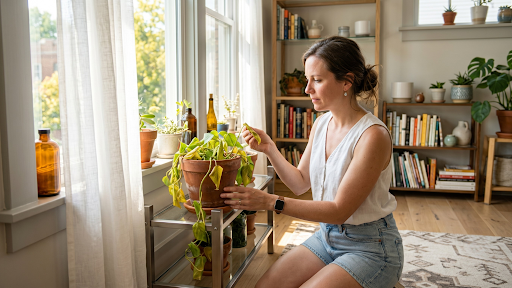
Many of us love to turn a balcony into a little green hideaway, especially in cities. Dense pots, tall planters and hanging baskets look beautiful, but they can also change the air and moisture levels around us.
Thick planting can:
-
Trap humidity between leaves and walls
-
Create cool, shaded nooks where mosquitoes can rest in the day
-
Hide small pockets of damp compost or water in trays and saucers
A few herbs, such as citronella, lavender, geranium and mint can gently nudge insects away, but they are not strong shields on their own. When mosquito pressure climbs in late summer, planting alone usually cannot keep up. That is where a fine fragrance insect repellent becomes the reliable layer that sits on your skin and keeps you comfortable among the foliage.
Simple tweaks help:
-
Empty saucers and self-watering trays shortly after watering
-
Group pots so air can move between them, instead of wall-to-wall leaves
-
Water in the morning, so surfaces dry by evening
For humid, plant-heavy balconies, we like using a repellent body lotion as a hydrating base before going outside. Then, just before dusk, a quick top-up with a matching spray adds a protective veil where skin is more exposed.
Standing Water, Drains and Hidden Breeding Pockets
Mosquitoes need water to complete their life cycle. They lay eggs in still or very slow-moving water, and the larvae grow there before emerging as adult biting insects. Late summer often brings warmer, slightly muggy evenings across the UK, which can give these tiny breeding spots just what they need.
On balconies, standing water can collect in places we barely notice:
-
Blocked or slow balcony drains
-
Overflow from guttering that splashes onto ledges
-
Air-conditioning drips, hitting the same patch of floor or tray
-
Forgotten plant trays, pet bowls or decorative water bowls
Even a small amount of water, left undisturbed for a few days, can support new mosquitoes just as we want to enjoy those soft evenings outside. That is why a quick weekly balcony check is worth the effort.
A simple routine might include:
-
Lifting and brushing drain grates so water can run freely
-
Tipping away old water from bowls, saucers and features and topping them up with fresh water
-
Checking shared ledges or corners for pools and gently nudging any neighbours to keep those clear too
Once those breeding pockets are reduced, a fine fragrance insect repellent can serve as the finishing layer, not the only shield. It is far easier to stay bite-free when fewer insects are hatching right beside your seating area.
Lighting, Heat and Evening Habits That Lure Mosquitoes
Mosquitoes and midges are drawn to light, warmth and our breath. On a balcony, fairy lights, wall lamps and even the glow from inside the flat can change where insects gather.
Cool, very bright light tends to grab more insect attention than softer, warm white light. When those lights sit right by a door or next to your chair, you can create a glowing target area. If that is also where indoor air escapes, mosquitoes get both a visual cue and a thermal cue pointing straight to you.
Heat also shapes their path. They seek out:
-
Sun-warmed brick or stone that holds heat after sunset
-
Dark tiles or decking that stay warmer under bare feet
-
Outdoor heaters or cooking areas that give off steady warmth
To lower the lure:
-
Keep brighter lights a little away from the main seating, and dim what you can
-
Avoid leaning back against sun-warmed walls once the heat has built up
-
Apply repellent 20 to 30 minutes before stepping outside, so it has time to settle on the skin
We often suggest layering: start with an Alfresco Shop body lotion for gentle, all-over plant-based protection, then add a fine fragrance insect repellent to pulse points like wrists, neck, ankles and behind the knees, where skin is usually bare in evening outfits.
Personalising Your Alfresco Routine for Any Balcony
At this point, it helps to do a quick balcony audit across a few evenings. Pay attention to when and where bites happen, then match that to what the space is doing.
You can note:
-
Still corners versus breezy edges
-
Dense planting versus open railings
-
Any standing water sources and how often they reappear
-
Lighting positions and which walls or floors feel warmest
From there, shape your own routine. A humid, sheltered balcony with lots of pots might call for richer coverage: a repellent body lotion for the whole body, plus a generous spray along the lower legs, arms and neck, with top-ups around dusk. A drier, windier balcony may only need targeted sprays on ankles, wrists and neckline, timed before drinks outside or a barbecue.
It can even help to keep a simple bite diary for a week or two. Note what you wore, where you sat and how you used your fine fragrance insect repellent. Small changes in timing or placement often make a big difference. Our aim at Alfresco Shop is to help turn your balcony, whether in London or another corner of the UK, into a stylish, softly scented, low-bite refuge that you can enjoy right through late summer and into early autumn evenings.
Enjoy Outdoor Living With Protection That Smells Beautiful
Enjoy comfortable time outdoors without compromising on scent by choosing our fine fragrance insect repellent. At Alfresco Shop, we carefully craft each product so you can enjoy effective protection that feels luxurious on your skin. Explore the collection today to find the fragrance and format that best suits your outdoor lifestyle.
